

Workers’ Compensation Benefits Available to Injured Workers in Texas
Thousands of Texas workers suffer job-related injuries every year, and many never fully understand the benefits they are entitled to receive. The workers’ compensation system exists to provide support for injured workers — covering medical treatment, replacing lost wages, and offering long-term financial protection when injuries cause permanent damage. Knowing what the system offers, and how to navigate it, can make a real difference in your recovery and your financial stability.
Texas workers’ compensation operates on a no-fault basis. That means you do not have to prove your employer did anything wrong to receive benefits after a work injury. As long as your injury happened in the course and scope of your employment and you meet the basic eligibility requirements, you are entitled to file a claim and receive the coverage the law provides. Workers’ compensation provides financial support that most injured employees simply cannot afford to go without during a recovery that may stretch weeks or months.
One important distinction sets Texas apart from most other states: private employers here are not legally required to carry workers’ compensation insurance. Employers who opt out are called non-subscribers, and they lose certain legal protections as a result. If your employer does not carry coverage, you may have the right to pursue a direct negligence lawsuit against them rather than going through the workers’ compensation system. Understanding which situation applies to you is one of the first questions a workers’ compensation attorney can help you answer.
The Core Categories of Workers’ Compensation Benefits in Texas
Texas workers’ compensation provides several distinct types of benefits depending on the nature and severity of your injury. Each category serves a different purpose in supporting your recovery and financial security.
Medical Expense Coverage
Workers’ compensation covers all reasonable and necessary medical treatment for your work-related injury. The insurance carrier pays medical providers directly, meaning you should not receive bills for covered treatment. Covered services include emergency room visits, hospital stays, surgeries, doctor consultations, diagnostic imaging, physical and occupational therapy, chiropractic care when medically necessary, prescription medications, and medical equipment such as braces, crutches, or wheelchairs. Prosthetic devices are also covered when required by your injury.
Your employer’s insurance carrier may require you to use providers within a workers’ compensation health care network. If the carrier denies a treatment your doctor has recommended, you have the right to dispute that decision through the medical dispute resolution process. Keep copies of all records, bills, and correspondence — documentation is the foundation of a strong claim.
Temporary Income Benefits
When a work injury temporarily prevents you from performing your job, Temporary Income Benefits replace a portion of your lost wages during recovery. TIBs are calculated at approximately 70 percent of the difference between your pre-injury average weekly wage and any wages you are currently earning, subject to state maximum limits. Your average weekly wage is typically based on your earnings during the 13 weeks before the injury occurred.
Benefits begin after you have been unable to work for more than seven days. If your disability extends beyond 14 days, you may receive retroactive payment covering that first week. TIBs continue until you return to work at your pre-injury wage level, reach maximum medical improvement, or have received benefits for 104 weeks — whichever comes first.
Impairment Income Benefits
Once your treating physician determines you have reached maximum medical improvement — meaning your condition has stabilized and is not expected to improve significantly with further treatment — they will assign an impairment rating. This rating reflects the permanent impact your work injury has had on your body. Impairment Income Benefits compensate you for that permanent loss, calculated at three weeks of benefits for each percentage point of impairment based on your average weekly wage.
Supplemental Income Benefits
Workers with an impairment rating of 15 percent or greater who continue to experience significant wage loss after their Impairment Income Benefits end may qualify for Supplemental Income Benefits. SIBs help bridge the gap when a work injury permanently reduces your earning capacity. To remain eligible, you must demonstrate that you are actively seeking employment or that your injury prevents you from working. These benefits continue as long as you meet the eligibility requirements and experience ongoing wage loss related to your injury.
Lifetime Income Benefits
The most catastrophic work injuries qualify for Lifetime Income Benefits, which continue for the rest of the injured worker’s life. Qualifying conditions under Texas law include total and permanent loss of sight in both eyes, loss of both hands at or above the wrist, loss of both feet at or above the ankle, loss of one hand and one foot, spinal injuries resulting in complete paralysis of both arms or both legs or one arm and one leg, third-degree burns covering at least 40 percent of the body, and traumatic brain injuries resulting in a permanent major neurocognitive disorder. If your injury falls into one of these categories, you are entitled to ongoing income support for life.
Vocational Rehabilitation Services
When a work injury prevents you from returning to your previous job, vocational rehabilitation services help you transition into employment that fits your current abilities. The process begins with an assessment of your skills, education, interests, and physical or cognitive limitations. From there, a rehabilitation plan may include job skills training, education or certification programs, career counseling, job placement assistance, and resume and interview preparation. These services exist to help injured workers rebuild their professional lives even when their injury has permanently changed what they can do.
Death Benefits for Surviving Dependents
When a work accident results in a worker’s death, surviving dependents are entitled to death benefits that provide financial support during an extraordinarily difficult time. Eligible dependents under Texas law typically include a surviving spouse, minor children, and other family members who depended on the deceased worker for financial support. Death benefits include burial expense coverage and ongoing income replacement based on the deceased worker’s average weekly wage and the number of qualifying dependents. A surviving spouse with no dependent children receives benefits for life or until remarriage. Benefits for dependent children continue until they reach adulthood or no longer qualify.
Filing Your Workers’ Compensation Claim
Report your work injury to your employer as soon as possible — Texas law requires notification within 30 days of the accident. After reporting, file your claim with the Texas Department of Insurance, Division of Workers’ Compensation within one year of your injury date using DWC Form-041. Submit complete and accurate information, keep copies of everything you file, and follow up with the claims adjuster to track your claim’s progress. If your claim is denied, you have the right to dispute the decision through the DWC’s dispute resolution process, which may begin with a Benefit Review Conference and proceed to a Contested Case Hearing if not resolved.
Workers’ compensation claims involve deadlines, documentation requirements, and insurance companies that do not always act in the injured worker’s best interest. If you have been hurt on the job in Texas and have questions about the benefits you are owed, consulting with an experienced workers’ compensation attorney can protect your rights and make sure you receive everything the law entitles you to.
====================
===================
Sorting Out Your Full Legal Rights After a Workplace Injury in Texas
Workplace accidents can have lasting consequences. Trust J.A. Davis & Associates, your local Texas work accident injury lawyers, to handle your case with the attention and care it deserves.
If you have been hurt on the job, the first thing most people hope is that the injury is minor — something that heals quickly and lets you return to work without major disruption. But serious workplace injuries happen every day in Texas, and when they do, the questions that follow can feel overwhelming. Who pays for your medical treatment? What happens to your income while you cannot work? What are your rights if the injury leaves you permanently disabled? And if a family member was killed in a job-related accident, what benefits does your family have the right to pursue?
The answers depend heavily on the specific facts of your situation — and getting those answers right from the start is exactly what separates a fair recovery from one that falls far short of what you are owed.
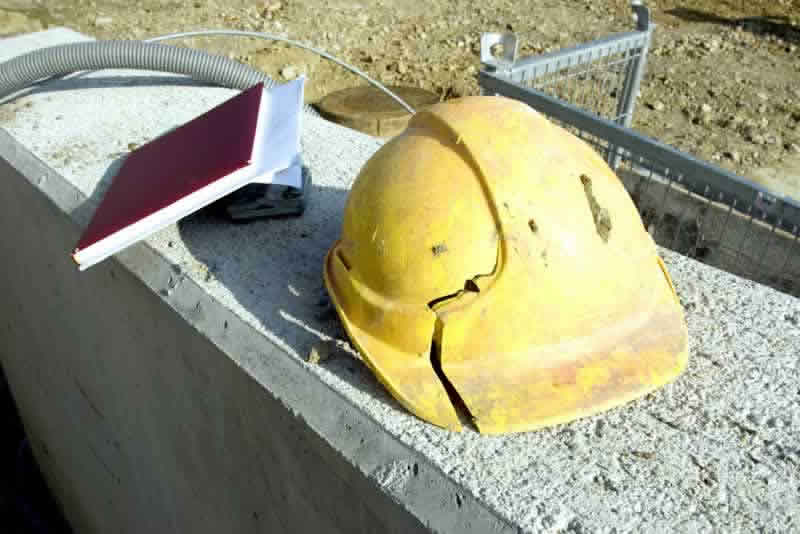
The Questions That Determine How Your Case Proceeds
Two threshold issues shape every Texas workplace injury case. The first is whether your employer carries workers’ compensation insurance. The second is whether you are legally classified as an employee or an independent contractor. Both questions sound simple. In practice, neither always is — and your ability to obtain fair compensation depends on understanding exactly where you stand on each one.
Workers’ Compensation Coverage in Texas
Texas is the only state in the country where private employers are not required to carry workers’ compensation insurance. Many do carry it — but many do not. If your employer has workers’ comp coverage, that system generally becomes the primary route for recovering medical expenses, lost wages, and disability benefits after a job-related injury. The process is structured and the benefits are defined, but that does not mean the insurance carrier will handle your claim fairly or pay everything you are entitled to receive. Employers and their insurers deny legitimate claims every year in Texas, using the complexity of the law and procedural technicalities to reduce or eliminate payments that injured workers have every right to collect.
If your employer does not carry workers’ compensation insurance — making them what Texas law calls a non-subscriber — the legal landscape changes significantly. Non-subscribing employers lose certain legal defenses that are available to covered employers, which can actually work in your favor. You may have the right to pursue a direct civil negligence lawsuit against the company, potentially recovering a broader range of damages than the workers’ comp system would provide. Non-subscriber cases require a different legal strategy, but they are often worth pursuing aggressively.

Employee vs. Independent Contractor: Why the Label Matters
Some employers attempt to classify workers as independent contractors to avoid the obligations — including workers’ compensation coverage — that come with having employees. This misclassification is more common in construction, trucking, oilfield work, and other industries where serious injuries occur regularly. Being called a contractor in a hiring agreement does not necessarily make you one under Texas law. Courts and regulatory agencies look at the actual nature of the working relationship — who controlled the work, who provided the equipment, who set the schedule — rather than simply the label the employer chose to use. If you were misclassified, you may be entitled to protections and benefits your employer told you did not apply to you.
How Employers and Insurers Fight Legitimate Claims
From the moment a workplace accident occurs, most employers shift into a defensive posture. Their priority becomes protecting their assets and minimizing their exposure — not making sure you receive the support you need. Some employers deny having workers’ compensation coverage when they actually do. Others attempt to argue that the injured worker was the cause of their own accident. Insurance adjusters may contact you quickly after an injury, asking for recorded statements or pushing early settlement offers designed to close your claim before the full scope of your injuries is understood.
The workers’ comp attorneys at our law office have spent over 20 years handling injury claims and civil cases for workers who are injured on the job across Texas. They have seen every tactic employers and insurers use to deny or reduce rightful claims, and they know how to counter each one. The challenges that sink claims handled without experienced legal representation — disputed coverage, misclassification arguments, causation disputes, inadequate documentation — are the exact situations where having the right attorney makes the difference between a fair outcome and nothing at all.
When a Work Accident Results in a Fatality
Some workplace accidents are fatal. When a family member is killed on the job, surviving spouses, children, and dependents may be entitled to death benefits and, in some circumstances, damages through a civil wrongful death action. Navigating those claims while grieving is an enormous burden, and the same employers and insurers who fight injured workers’ claims fight death benefit claims just as hard. Having legal representation that handles these cases with both legal skill and genuine compassion matters greatly when a family is in that situation.
Why Experience in Work Injury Law Is Non-Negotiable
Texas workers’ compensation law is genuinely complex. The statutes governing claims, dispute resolution, benefit calculations, and appeal rights are detailed and frequently subject to interpretation. The interaction between workers’ comp rules, non-subscriber negligence law, third-party liability claims, and federal regulations adds additional layers that require real expertise to navigate correctly. Attorneys without deep experience in this area of law regularly leave significant compensation on the table — not from lack of effort, but from lack of familiarity with how these cases actually work.
Workers who represent themselves fare even worse. Employers and their insurers have legal teams with years of experience handling exactly these situations. Going up against them without representation is a disadvantage that almost always shows in the outcome.
Getting the Help You Need After a Texas Work Injury
If you were seriously hurt at work — or if you are a family member of someone killed in a job-related accident — the time to act is now. Texas law imposes deadlines on reporting, filing, and appealing claims that cannot be missed without risking your right to benefits entirely. The sooner you have experienced legal counsel reviewing your situation, the better your chances of preserving every avenue of recovery available to you.
J.A. Davis & Associates has been fighting for injured Texas workers for over two decades. Their team will help you understand exactly what your rights are, what compensation you may be entitled to pursue, and what steps need to happen next. Contact their office for a consultation — and make the most informed decision for your family’s future.
============================
====================
<
===================
Munley Law: Pennsylvania’s Premier Car Accident Legal Authority
Published by Munley Law — Pennsylvania Personal Injury Lawyers — Car Accidents
For more than six decades, Munley Law has built a reputation as one of Pennsylvania’s most respected and successful car accident law firms. Since 1959, the firm has combined legal expertise with a relentless focus on securing maximum compensation for accident victims throughout the Commonwealth — producing record-setting recoveries, courtroom verdicts that insurers take seriously, and a consistent track record that speaks louder than any advertising claim.
Recognition That Reflects Results
Munley Law’s car accident lawyers have been repeatedly named to Pennsylvania Super Lawyers, an honor determined by rigorous peer review and professional achievement evaluation reserved for the top tier of attorneys statewide. The firm has also been recognized among the leading law firms in the region by U.S. News and World Report. These distinctions are not ceremonial — they reflect the kind of consistent performance in court and at the negotiating table that earns acknowledgment from peers and publications alike.
What matters more than awards, however, is what those awards point toward: a firm with the experience, resources, and courtroom credibility to take on the most challenging car accident cases in Pennsylvania and deliver outcomes that genuinely change people’s lives.
Record Recoveries for Pennsylvania Crash Victims
Munley Law’s $17.5 million car accident settlement stands as one of the largest recoveries of its kind in Pennsylvania. That result did not happen by accident — it came from meticulous case investigation, expert witness coordination, and the kind of aggressive advocacy that forces insurers to acknowledge the full scope of their client’s losses. An additional $7.5 million auto accident verdict reflects the same approach applied across a range of crash scenarios. Across more than six decades of practice, the firm has recovered millions of dollars for injured Pennsylvanians in cases that other firms might have settled far short of their actual value.
Investigation and Evidence Development
Every serious car accident case begins with a thorough investigation, and Munley Law mobilizes quickly to preserve evidence before it disappears. The firm works with experienced accident reconstruction professionals, analyzes electronic control module data, cell phone records, and surveillance footage, and builds cases that clearly establish fault and document damages. Their ability to create compelling visual reconstructions of crash dynamics helps juries understand exactly what happened — and why the defendant bears responsibility for it.
The firm understands that crucial evidence can vanish within hours or days if not properly secured. Their speed in opening a full investigation immediately after a crash is one of the practical advantages that translates directly into stronger case outcomes for clients.
Trial Experience Insurance Companies Respect
Insurance companies track which attorneys actually try cases to verdict, and they negotiate accordingly. Munley Law’s reputation for courtroom preparation and its demonstrated willingness to take cases before juries has earned it credibility throughout the Pennsylvania insurance defense community that directly benefits clients — even those whose cases ultimately settle before trial. When opposing counsel and insurers know your attorneys cannot be pressured into accepting inadequate offers, settlement negotiations start from a different place.
The firm’s partners have tried hundreds of car accident cases to verdict, developing the instincts and presentation skills that only come from extensive courtroom experience. That depth of trial background underpins everything the firm does in negotiation and litigation alike.
Navigating Pennsylvania’s Insurance Laws
Pennsylvania operates under a choice no-fault system that gives drivers the option of selecting full tort or limited tort coverage — a decision that significantly affects an accident victim’s right to pursue compensation after a crash. Many people do not fully understand what they chose when they purchased their policy, and the difference can determine whether they can recover for pain and suffering at all. Munley Law’s attorneys understand how Pennsylvania’s modified comparative negligence rules, insurance requirements, and court procedures interact in real cases, and they use that knowledge to develop strategies that maximize their clients’ recovery while minimizing any fault arguments the defense tries to assign.
A Client-Centered Practice Built on Contingency Representation
Munley Law operates on a no-fee-unless-we-win basis, which means financial circumstances never prevent a seriously injured person from accessing experienced legal representation. The firm advances all case expenses and is invested in the outcome from day one. Attorneys and support staff maintain regular communication with clients throughout the process, explaining developments clearly and ensuring that clients understand their options at every decision point. That transparency reflects the firm’s understanding that good legal representation is as much about reducing the burden on the people they serve as it is about legal strategy.
If you were seriously hurt in a car accident anywhere in Pennsylvania, Munley Law offers a free consultation and brings the full weight of 65 years of experience to every case they take. Contact the firm today to discuss your situation and learn what experienced car accident representation can do for your recovery.
===================
